
Visualizing the Invisible: Deconstructing the CipherEngine Educational Content Series
Breaking the Black Box
As researchers, we are used to writing papers for people who already know what a “homomorphic encryption scheme” is. But recently, with the CipherEngine project, we took on a very different challenge: explaining our world to everyone else. Here is a look behind the scenes at how we stripped down the complex math of cryptography and rebuilt it into 6 animated visual narratives.
The Narrative Strategy: Finding Sophie
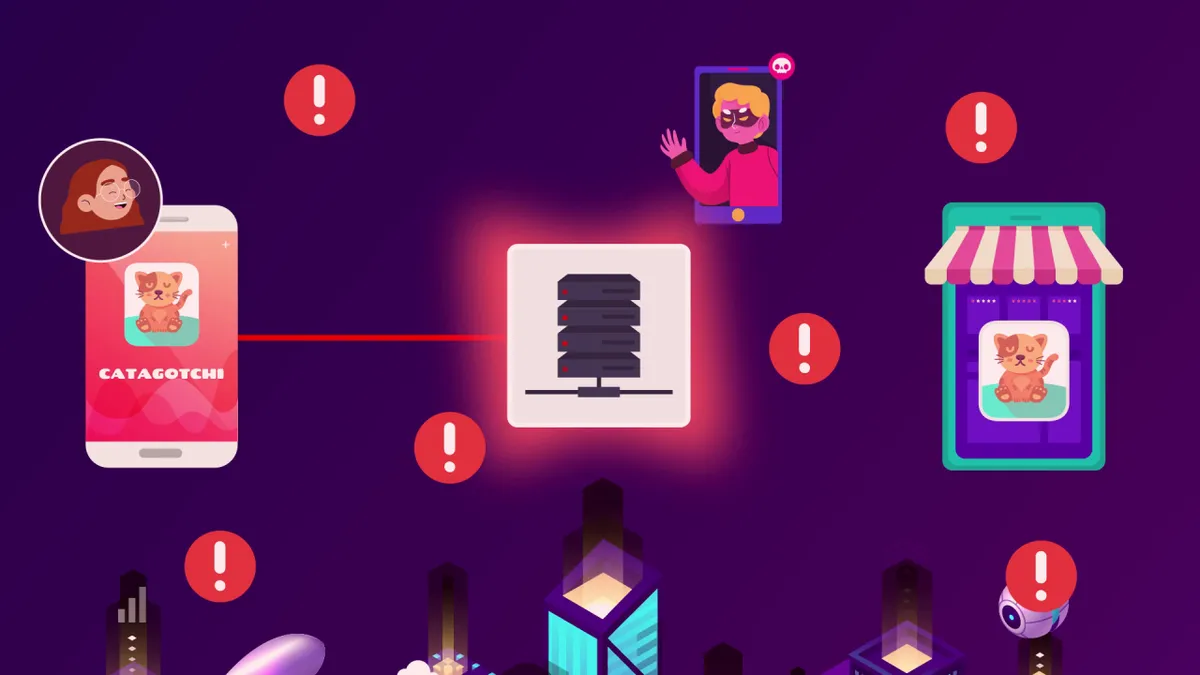
The first thing we realized was that talking about “users” and “servers” is boring. We needed stakes. We introduced “Sophie”, the protagonist of our series, who chats with her friends and buys video game extensions. By anchoring the script in her perspective (her fear of phishing, her need for privacy) the technical concepts suddenly mattered. It was about ensuring Sophie didn’t get scammed out of her pocket money. (What is Cryptography, Cybersecurity, Privacy)
The Analogy Hunt - Abstraction Layers
How do you visualize something that is purely mathematical? We spent a lot of time brainstorming physical metaphors for digital problems.
- The School Mailbox (PKI): To explain Public Key Cryptography, we ditched the network diagrams. Instead, we used a school mailbox. Anyone can drop a letter in (Public Key), but only the director has the key to open it (Private Key). It sounds simple, but getting that analogy right took several drafts to ensure it was accurate without being confusing (Symmetric vs. Assymetric Encryption).
- The Padlock (Brute Force): When writing on the Enigma Machine, we compared the complex rotors to a padlock with only a few dials. It made the concept of “brute forcing” a password immediately understandable.
Video Production
Bringing these scripts to life required an end-to-end production workflow, blending technical accuracy with motion design principles.
- Visual Engineering: Vector assets were leveraged to establish a consistent visual language. These were used for compositing, using keyframe animation to simulate data flows, locking mechanisms, and network traffic.
- Audio: To ensure broadcast-quality delivery, voiceover narration was recorded and mastered, utilizing noise reduction and EQ processing to reinforce the professional tone of the content.
Killing the Jargon
In the script about Multi-Factor Authentication, the temptation was to talk about authenticator protocols and hash functions. We deleted all of it. Instead, we boiled it down to the three human components:
- Something you Know (Password)
- Something you Are (Biometrics)
- Something you Have (Phone)
It forced us to ask: “Does the viewer need to know the math to understand the safety?” Usually, the answer was no.
The Takeaway
The process of creating the CipherEngine videos solidified our belief that communication is an architectural constraint. When you force yourself to explain a complex topic simply, you realize which parts actually matter.
This end-to-end video production was a refreshing break from systems architecture, development, and academic papers, and a reminder that at the end of the day, all this math is just about helping Alice send a message to Bob securely.
Watch the full video series here.